True Security Gear is reader-supported. When you buy through links on our site, we may earn an affiliate commission. This doesn't affect our verdicts.
A backyard shed or detached garage is easiest to protect with boring hardware: a strong padlock on a hasp that cannot be pried off, light that comes on when someone approaches, and a rule that nothing valuable or dangerous lives inside. Those three do more than any camera. They also address a second problem that most owners overlook, which is that the tools in the shed can be used on the house. Police guidance is blunt about it, and the logic is hard to argue with.
Why an outbuilding gets targeted
An outbuilding is usually farther from the house, out of sight of the street, and locked with a lighter lock than the back door. Takoma Park, Maryland, police note in their advice on securing your shed that tools stored in a shed could be used to break into your home. That reframes the risk. A loss from the shed is bad, but a crowbar or a ladder taken from it can make the next break-in easier.
We could not find a federal statistic on shed burglaries that we could cite with confidence, so this article does not offer one. The advice stands on the mechanics of how an outbuilding is built and used.
The lock and the hardware around it
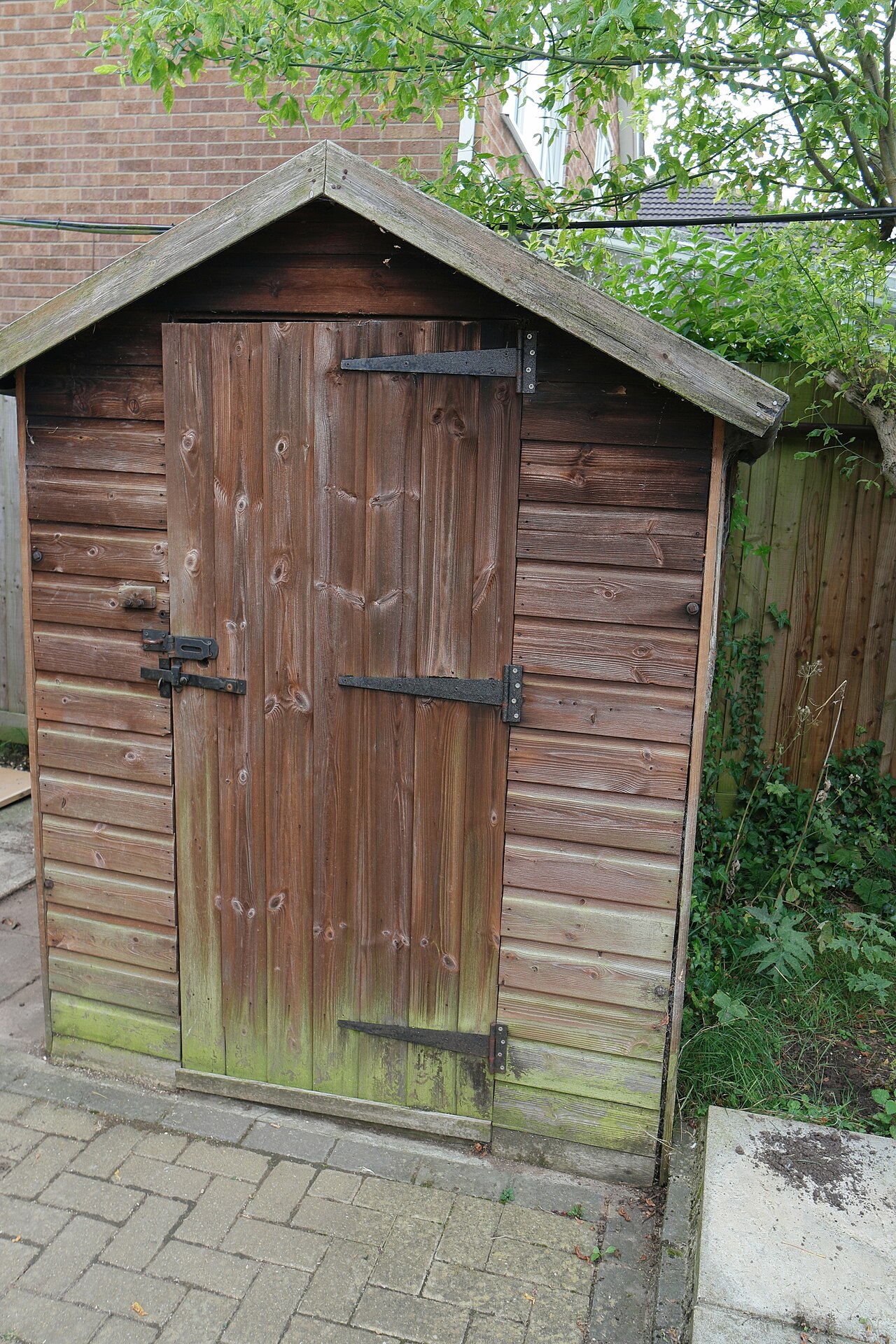
The Takoma Park guidance says to keep the shed locked when it is not in use, to use a strong padlock, and to make sure the hardware around the lock is sturdy and cannot be easily pried off. The second half of that is the part people skip. The padlock can be excellent, but if the hasp is a thin stamped plate held on by short screws into a thin door, a pry bar defeats the whole assembly and leaves the lock hanging.
Look at your hasp. It should be steel, and it should cover the screws so the heads are not exposed when the hasp is closed. Check what it is screwed into. If the door skin is thin plywood, fit a backing plate on the inside or use carriage bolts that pass through the door, with nuts on the inside. The hinges deserve the same attention. If the hinge pins can be tapped out, the door can be lifted away on the hinge side no matter how good the lock is.
Shed doors also tend to be made of the same lightweight material as the walls. A thief does not have to defeat the lock if the panel next to it gives way. Examine the structure the way a person with a crowbar would, and fix the weak spots first. Police advice in Takoma Park adds that an annual inspection to repair structural problems is part of the job.
Light, windows and sensors
The same guidance recommends motion-sensor lights to deter unwelcome visitors, with the side benefit that you can see when you go out at night. Our comparison of motion lights and dusk-to-dawn lights explains the tradeoff: a light that is always on stops standing out, while one that switches on when someone approaches draws attention exactly when it matters.
For windows, it suggests privacy-control window film or glass frosting spray so nobody can look in and see what is stored, or blinds that can be closed when the shed is empty. It also suggests a wireless sensor system that sends a notification to your phone when tripped. That last point is worth taking seriously. A door contact on a shed, or a small motion sensor inside, costs little and tells you what a camera might only record after the fact.
Be realistic about reach. A wireless sensor in a shed at the far end of a long lot may be outside your Wi-Fi range, so test the signal where it will be installed. Some devices use a different radio and a hub placed closer to the shed, and some use cellular. If the shed is far from the house, a battery-powered device with its own connection is easier than a cable run.
What goes inside
The tools matter, and so do the rest of the contents. Ladders are an obvious access tool, and they are easier to secure by chaining them to a wall or a ground anchor. Hand tools can go in a lockable box, bolted to the floor so that the whole box cannot be carried off. Fuel and chemicals have their own rules, which are worth reading on the container label. High-value items such as a bicycle, a power tool set or a generator are better kept in the house, in a garage with a sturdier door, or in a bolted-down locker. Photograph the serial numbers and keep the list somewhere that is not the shed. An unrecorded serial number makes a stolen tool nearly impossible to trace.
If you store a bike in the shed, put a second lock on it, so the person who breaks in has a second job to do.
Detached garages are a different problem
A detached garage typically has a larger door than a shed, often an overhead door with an opener, plus a side entry door and windows. The overhead door is the weak point in many setups. Our piece on garage door security covers the opener, the emergency release and why leaving a remote in the car invites trouble. The side door is a normal entry door, so everything in how to reinforce a door applies: a deadbolt, a solid frame and a strike plate with long screws.
If the garage houses a car, add it to your thinking about vehicle theft. A car that is locked inside a locked garage is harder to steal, but a garage door opener left in the vehicle allows entry to the garage and sometimes to the house.
Cameras, and what they can and cannot do
A camera pointed at the shed door can show you who came and when, and it may discourage someone who notices it. It cannot stop the pry bar. Treat it as a record. A camera that needs a signal has the range problem mentioned above, and a camera with local storage keeps recording even if the connection drops. Put it where a person cannot easily reach it, and aim it at the door, not at the sky.
Our take
Spend first on the hasp, the screws and a quality padlock, then on a motion light, and only then on sensors or a camera. Take the ladder, the pry bar and the best tools out of the shed or lock them to something. A shed full of equipment a thief can use on your back door is a bigger risk than the shed itself.
Common questions about shed and garage security
Can the tools in my shed be used to break into my house?
Yes, and police guidance such as Takoma Park’s says so directly. Lock tools in a box or chain them, and keep ladders secured.
What is the weakest part of a shed lock?
Often the hasp and the screws, not the padlock. Police advice is to make sure the hardware around the lock is sturdy and cannot be easily pried off.
Walk out to the shed tonight with a flashlight and try to open the door without the key. What gives first is what you fix.
Who checked this
True Security Gear does not run a test lab and does not take units apart. One half of the work is documents: manufacturer specs, certifications, and seller claims checked against the paperwork. The other half is the record owners leave behind, in verified-buyer reviews, owner forums, and warranty complaints. Where that evidence is thin we say it is thin, rather than filling the gap with an adjective. The criteria are on How we evaluate.
Google lets you pick which sites come up first in your own results.