True Security Gear is reader-supported. When you buy through links on our site, we may earn an affiliate commission. This doesn't affect our verdicts.
Leans yes, with a caveat that matters more than the yes. A fake camera works on someone doing a quick, surface-level scan of a house, glancing at the porch, deciding whether it looks like an easy target. Where it falls apart is against anyone who looks twice: no blinking LED at night, no cable running anywhere, a body made of lightweight plastic that moves when you tap it. Once a decoy gets spotted for what it is, one time, its deterrent value is gone for good, and word travels fast on a block where the same brand of dummy camera shows up on three porches.
Our take
A fake camera beats no camera at all, but a real budget camera like a Wyze Cam v4 costs barely more and does everything the decoy does plus actual recording. There’s rarely a good reason to buy the fake one on purpose.
If you’re starting from scratch and haven’t picked any camera yet, fake or real, it’s worth reading our guide to the cameras that actually deter burglars first. It covers the three placement spots that matter most, and the answer below assumes you’ve already got at least one of those covered.
How Burglars Spot a Fake Camera
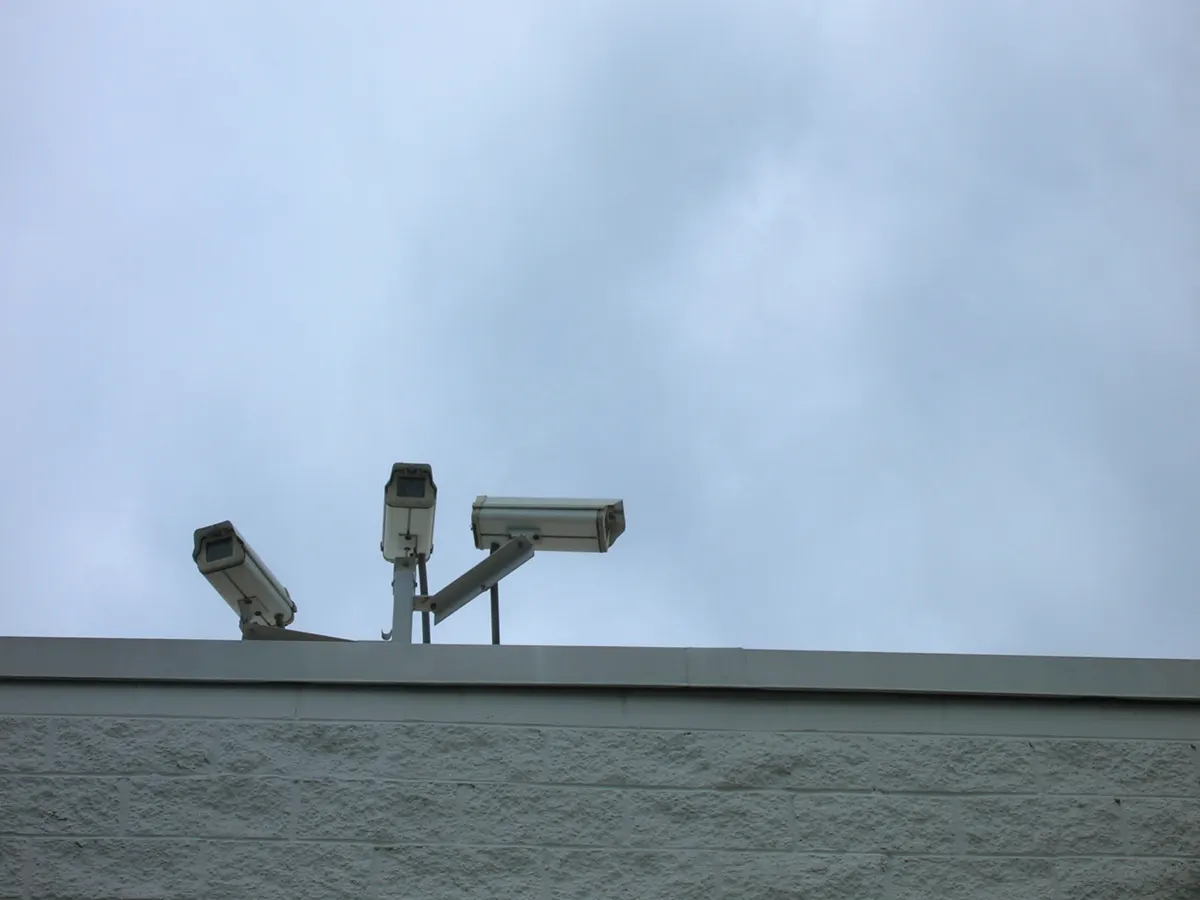
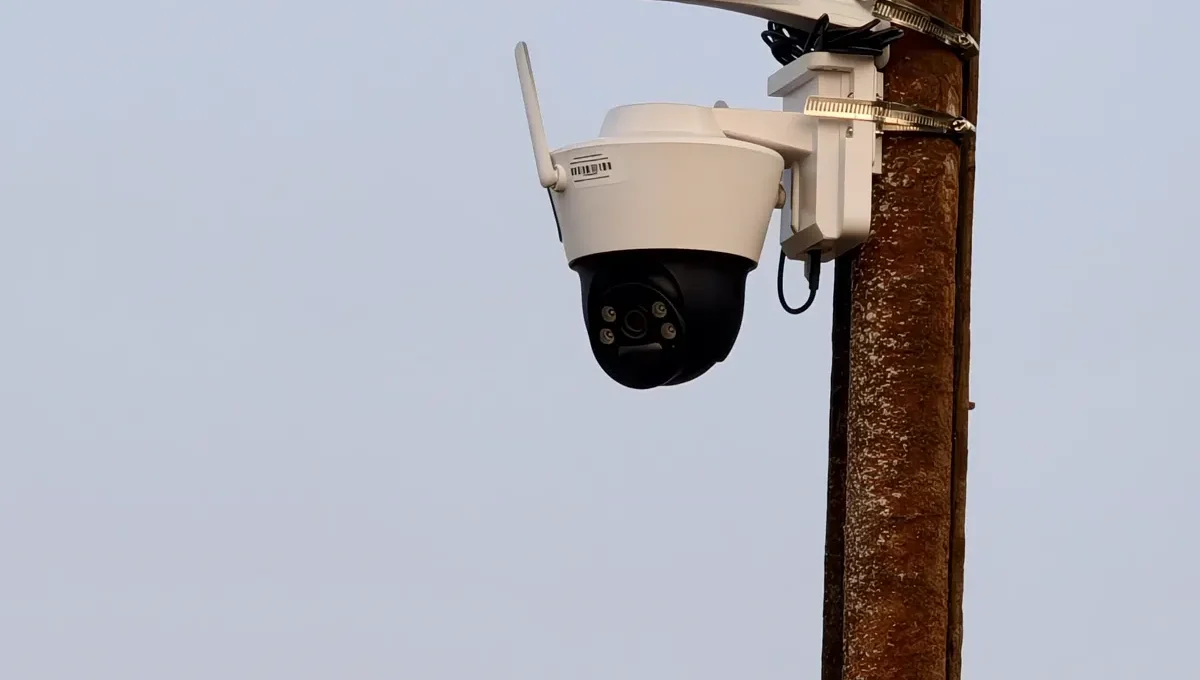
People who’ve worked residential burglary cases and locksmiths who install real systems for a living tend to agree on the tells. A real camera has a status LED that blinks at night, even a dim one. It has a cable, even a hidden one, running somewhere, or a visible battery compartment with real weight to it. It moves slightly in wind or gets adjusted over time as the owner re-angles it. A decoy usually skips all three, it’s hollow, static, and mounted once and never touched again, which starts to look staged the longer someone has to stand there deciding.
There’s also a simpler tell that has nothing to do with the hardware: repeated exposure. A neighborhood with a lot of foot traffic, delivery drivers, dog walkers, kids on bikes, eventually produces someone who’s handled that exact decoy model before, either because they own one or because they’ve seen it fail elsewhere. Once that happens, the fake camera’s reputation on that specific block is done, and it can’t recover the way a real camera’s reputation does.
When Does a Decoy Camera Help?
There’s one scenario where a fake camera earns its keep: as a cheap addition to a setup that already has at least one real camera doing the actual work. Mount a real doorbell camera at the front door and a decoy on a shed or a back fence where a real one isn’t worth the cost, and the decoy borrows credibility from the real one nearby. Nobody’s checking every camera on a property for a blinking LED, they’re pattern-matching off the one they already noticed.
What doesn’t work is going all-in on decoys because they’re cheaper. A house with three or four fake cameras and zero real ones is betting the entire strategy on nobody ever looking closely, and porches get looked at closely more often than people assume, especially by anyone who’s cased a block before.
Placement Matters More Than Whether the Camera Is Real
Here’s a detail that gets lost in the real-versus-fake debate: where a camera sits does more deterrent work than what’s inside the housing. A camera, real or decoy, mounted at eye level next to the front door where anyone approaching has to walk past it is doing its job just by being visible and hard to avoid looking at. The same camera tucked under an eave twelve feet up, angled down at a shallow spot on the porch, barely registers with someone walking up the path, and that’s true whether it’s recording 4K footage or nothing at all.
This is worth internalizing before spending money either way. A $15 decoy mounted at the right height and angle beats a $200 real camera mounted somewhere nobody notices it. The visibility does the deterring, the recording only matters after the fact, when you’re trying to identify who did what. If the goal is stopping someone before they try anything, placement is the lever, not the price tag or the authenticity of the hardware inside.
A Real Budget Camera Costs Almost the Same
This is the part that makes the fake-camera debate mostly academic. Decoy cameras typically run $15 to $25. A genuinely functional entry-level camera isn’t far behind that anymore.
Wyze Cam v4
The camera we’d point to first if the goal is “cheap but real,” it undercuts most decoys on price while recording.
- Color night vision, so it doesn’t need a floodlight to be useful after dark.
- Local microSD storage, no subscription required to see what it caught.
- Small enough to mount inconspicuously if you’d rather it not stand out.
Under $50 No monthly fee
Wyze Cam v4 on Amazon
Blink Mini 2
A slightly smaller footprint than the Wyze, plug-in power means it never needs a recharge.
- Free live view and motion alerts with no plan required.
- Compact enough to tuck into a corner without looking like a statement piece.
- Works indoors or outdoors with the included weatherproof adapter.
Under $50
Blink Mini 2 on Amazon
| Option | Records footage | Deterrent shelf life | Price band |
|---|---|---|---|
| Decoy / dummy camera | No | Until spotted once, then gone | $15–$25 range |
| Wyze Cam v4 | Yes, locally | Ongoing, no expiration | Under $50 |
| Blink Mini 2 | Yes, cloud (free tier) | Ongoing, no expiration | Under $50 |
For the fuller picture of which cameras belong at which entry point, our guide to the cameras that deter burglars ranks the three spots worth covering first, and none of them are a decoy.
If You Want the Front Door Covered Without a Bill
A real doorbell camera solves the front-door job better than any decoy ever will, and several do it without a monthly subscription attached. We rounded up seven of those in video doorbells that skip the monthly fee entirely, including a couple that cost about the same as a decent decoy once you factor in the local storage that ships in the box.
Frequently asked questions
Do fake security cameras stop burglars?
They can, against a casual scan of the property, but the effect disappears the moment someone spots the tells: no LED, no cable, no movement over time. A real budget camera avoids that risk for only slightly more money.
How can you tell a security camera is fake?
The usual giveaways are a missing or unlit status LED at night, no visible cable or battery compartment, and a static position that never seems to get adjusted. Lightweight plastic housing is another common tell up close.
Is it worth buying a fake camera to save money?
Rarely. Genuine budget cameras like the Wyze Cam v4 or Blink Mini 2 cost close to what a decoy runs and record footage, which makes the savings from going fake pretty small for the risk involved.
Can I mix fake and real cameras on the same house?
Yes, and it’s a reasonable way to use decoys. Put a real camera somewhere visible, like the front door, and a cheap decoy on a lower-priority spot like a shed or back fence, where it can borrow credibility from the real one nearby.
Does camera placement matter more than whether it’s real?
For pure deterrence, often yes. A camera mounted where someone has to walk past it does more work being visible than a real camera hidden somewhere it won’t be noticed. Recording quality only matters after the fact.
If you’re weighing where any of these cameras should go, our breakdown of where to put a security camera when you rent and our comparison of wired versus battery video doorbells both cover the placement questions that matter more than whether the camera in the box is real. And if you’re still deciding what to buy in the first place, start with our full camera guide before you spend money on either option.
Who checked this
True Security Gear does not run a test lab and does not take units apart. One half of the work is documents: manufacturer specs, certifications, and seller claims checked against the paperwork. The other half is the record owners leave behind, in verified-buyer reviews, owner forums, and warranty complaints. Where that evidence is thin we say it is thin, rather than filling the gap with an adjective. The criteria are on How we evaluate.
Google lets you pick which sites come up first in your own results.