True Security Gear is reader-supported. When you buy through links on our site, we may earn an affiliate commission. This doesn't affect our verdicts.
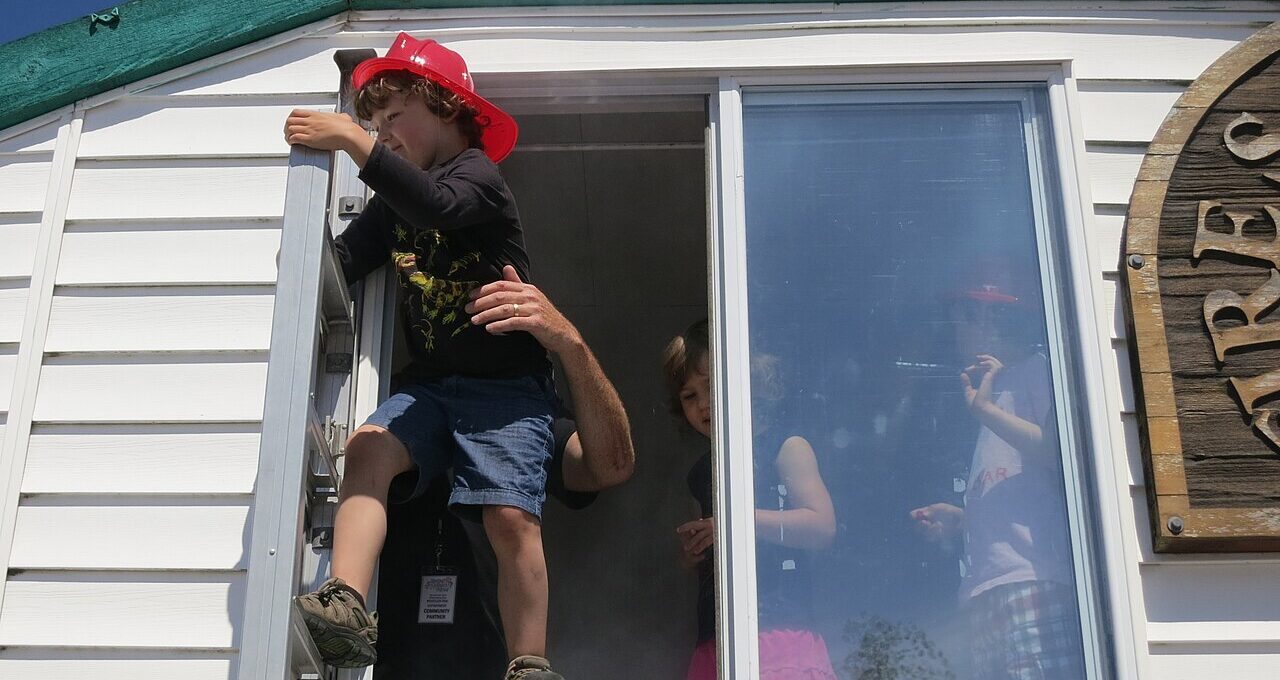
Ready.gov says a second way out of an upstairs room can include an escape ladder. If you rely on one, keep it where everyone can reach it, show children where it is, and practice using it. A ladder is part of a plan that also needs two ways out of every room and a meeting place.
What the official guidance actually says about ladders
Ready.gov’s home fire escape plan page puts it plainly: a second way out can include an escape ladder for rooms on an upper level. It adds that if your child needs to use one, you should show them where you keep it and practice how to use it.
That is nearly all the federal guidance says. The sources reviewed for this article, which include USFA’s escape plan page and NFPA’s Educational Messages Desk Reference, say nothing on ladder length, weight limits, mounting hardware or a certification standard. This article does not invent any. If you buy a ladder, read the manufacturer’s instructions and look for what the package says about the height it covers.
Why upstairs rooms need a second way out
Both Ready.gov and USFA say every room needs two ways out. NFPA’s Desk Reference puts it in its first steps: map each level of the home and identify two ways out (4.1.2), and plan two ways out of every room (4.1.7). A bedroom on an upper floor has a door and a window. If the hallway is on fire, the window is the other route.
Ready.gov also says a fire can become life-threatening in just two minutes, and USFA says everyone should be able to get out in under 2 minutes. That is the standard the window route has to meet.
Check the window before you buy anything
A ladder only helps if the window opens. Ready.gov says to check that windows and screens open easily. NFPA adds two specific points.
- A window air conditioner must not eliminate the second way out (4.1.8).
- If a window has security bars, they need quick-release devices (4.1.9).
Try each window in each upstairs bedroom. Painted shut, stuck, or blocked by a unit means the ladder will not matter.
Who may need help
NFPA says children, older adults and people with disabilities may need help to escape (4.1.3). Ready.gov’s plan page says to plan for children under six who cannot get outside alone. A ladder is a poor fit for a person who cannot climb down it unaided, and the sources do not cover that case. In that situation the plan has to include another person who knows what to do, or a route that does not depend on climbing.
Where to keep it
Ready.gov’s instruction is to show children where you keep it. That implies a fixed, known location in or near the room. Choose a spot that is not blocked by furniture, and make sure everyone who sleeps in that room knows it. The sources do not recommend a specific storage place, so use the one that you can reach in the dark.
Practice, including at night
Ready.gov says to drill at least twice a year, at different times of day or night. Its steps: sound the alarm, start a timer, and time everyone to the meeting place. Practice in the dark as well, and crawl low under smoke. For the ladder itself, the page says to practice how to use it, so do the drill with the ladder, not around it.
A real ladder deployment from an upper window is not something to rehearse carelessly. The sources do not describe how to do a safe practice run. Follow the maker’s instructions for that part.
If you cannot leave
Ready.gov and NFPA give a fallback. Feel the door and the space around it before opening (NFPA 4.3.4). If you are trapped, stuff towels or bedding in the cracks, call 9-1-1, and signal at the window with a flashlight or a light-colored cloth (4.3.7). Keep a flashlight near the bed (5.1.10).
After you are out
Go to your meeting place. Ready.gov says to call 9-1-1 once you reach it. NFPA also says to keep your house number visible from the street, day and night (4.1.15), so responders find you.
Plan checklist
| Item | Done when |
|---|---|
| Two ways out of each upstairs bedroom | Door and window both usable |
| Window opens | Tested, screen and any security bars release |
| Ladder stored | Everyone knows where it is |
| Drill | Done at least twice a year, including at night |
| Meeting place | Chosen, with 9-1-1 called from there |
Sources
- Ready.gov, Home fire escape plan, read November 2026
- Ready.gov, Home fires, read November 2026
- U.S. Fire Administration, Home fire escape plans, read November 2026
- NFPA, Educational Messages Desk Reference, 2026 edition (PDF), read November 2026
FAQ
Does every upstairs bedroom need an escape ladder?
Ready.gov says a second way out can include one. The requirement is two ways out of every room, and a ladder is one way to provide the second.
How often should we practice?
Ready.gov says at least twice a year, at different times of day or night.
What if the window will not open?
Then it does not count as a second way out. Ready.gov says to check that windows and screens open easily.
Are there safety standards for escape ladders?
The sources read for this article name none. Check the manufacturer’s instructions.
What about children?
Show them where the ladder is and practice. Ready.gov also says to plan for children under six who cannot get outside alone.
Who checked this
True Security Gear does not run a test lab and does not take units apart. One half of the work is documents: manufacturer specs, certifications, and seller claims checked against the paperwork. The other half is the record owners leave behind, in verified-buyer reviews, owner forums, and warranty complaints. Where that evidence is thin we say it is thin, rather than filling the gap with an adjective. The criteria are on How we evaluate.
Google lets you pick which sites come up first in your own results.