True Security Gear is reader-supported. When you buy through links on our site, we may earn an affiliate commission. This doesn't affect our verdicts.
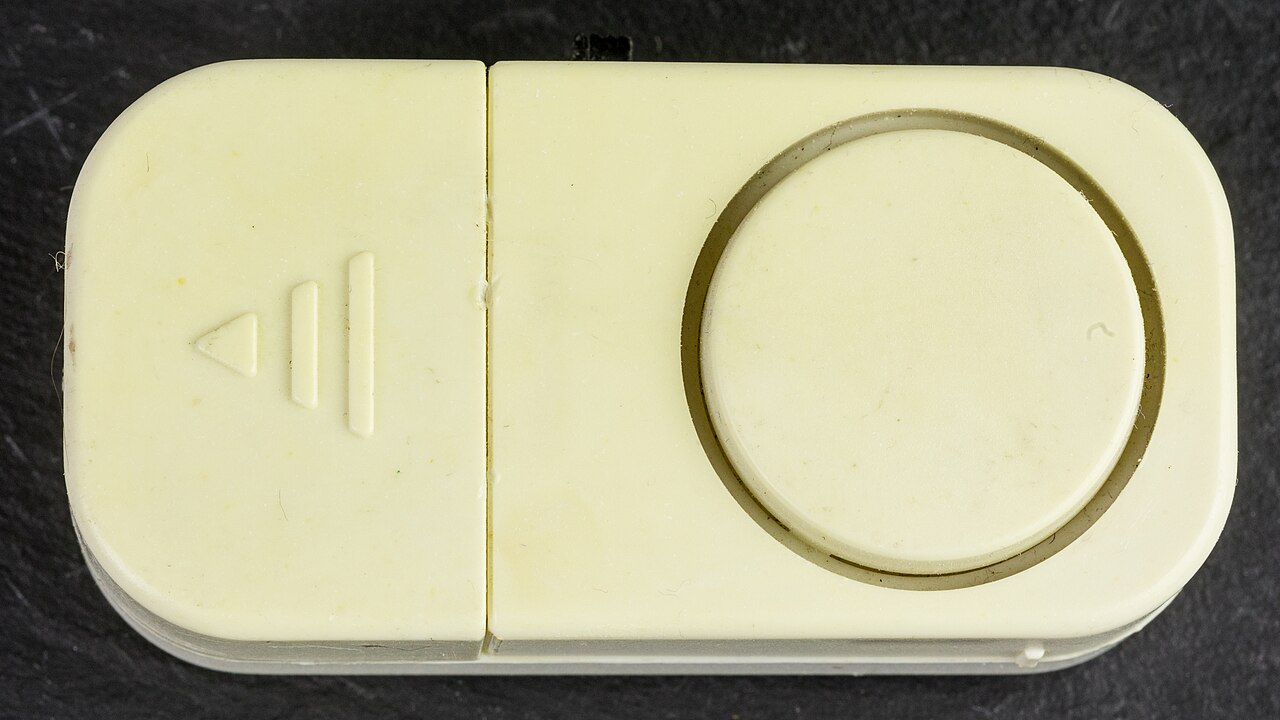
A window alarm is a small sensor that reacts to one of two events: the window opening, or the glass being struck or broken. Which one you need depends on how a burglar is most likely to get through your windows, and the federal data on that is more specific than most buying guides let on.
The two kinds of window alarm
The first kind is the magnetic contact. Alarm Grid explains in its magnetic contact FAQ that the device uses an internal reed switch together with a magnet. The sensor goes on the frame and the magnet on the moving part, and when the window opens the magnet separates from the sensor and the reed switch activates. Wired contacts open a circuit to tell the system, while wireless ones send a radio alert to the panel, which must use a frequency compatible with that panel.
The second kind detects shock. Abode’s help page for its shock and vibration sensor says it detects the shock or vibration that occurs when someone attempts to break the glass, and it is stuck to the window with double-sided tape, one sensor for each glass area you want covered. A contact sensor reacts to separation between magnet and sensor, so it follows that a pane broken while the sash stays shut is the job of the shock type. For a deeper comparison, see our piece on glass break sensors versus door sensors.
What burglars do at windows
The Bureau of Justice Statistics report Victimization During Household Burglary covers 2003 to 2007. In completed forcible entries, a window was involved in 48.8% of burglaries of unoccupied homes and 47.0% of occupied ones. Inside that, a damaged or removed pane showed up in 30.0% (unoccupied) and 27.6% (occupied), and a damaged or removed screen in 8.8% and 11.3%. The percentages do not add up to 100 because households can report more than one kind of damage.
Plenty of burglars walk in without force. In unlawful entries to unoccupied homes, offenders went in through an unlocked door or window in 40% of cases, and through an open door or window in 17%. When someone was home, the figures for an open and an unlocked door or window were 27% and 28%. The report counts doors and windows together there, so those numbers say nothing about windows alone. Among attempted forcible entries, removing or damaging a window screen was about as common in occupied (22%) as in unoccupied (18%) homes.
Put those pieces together and both sensor types have a job. A shock sensor addresses attempts on the pane, and a contact sensor addresses the window that was left open, unlocked, or pried up. Neither addresses the person who walks through an unlatched door, which is a different measure.
Placement that decides whether it works
Surety’s support page on door and window contact sensors describes them as two-part devices, a sensor with an internal reed switch and a magnet, that send an open or close signal to the alarm panel when the magnet moves away. For a window, the magnet goes on the frame of the moving portion and the sensor on the stationary frame, and when the window is closed the two should be in contact. The gap must not exceed the recommended magnetic gap in the manual, the magnet should be centered on the reed switch mark on the sensor, and the surface needs to be clean and dry if you use the adhesive backing. Alarm Grid gives a practical rule of thumb: keep the magnet within about a half inch of the sensor, because a larger gap causes false alerts.
Shock sensors work differently. Abode offers three sensitivity levels, high, medium and low, with low as the factory default, and says higher sensitivity triggers more easily. It also says banging on the window where the sensor is mounted should not trigger the sensor, and that to test it you strike the sensor itself, using the end of a pencil.
Comparing the sensors
| Sensor | Triggers on | Placement | Setup detail from the source |
|---|---|---|---|
| Magnetic contact | Magnet separating from the sensor when the window opens | Sensor on stationary frame, magnet on moving sash | Gap about a half inch or less, per Alarm Grid |
| Shock and vibration | Shock or vibration from an attempt to break the glass | Adhesive tape on the glass | Three sensitivity levels, low by default |
Choose the contact sensor for windows you actually open, and add shock sensors on large panes near the ground, around a rear door or on the side of the house that is hidden from the street. If you rent, stick-on wireless versions avoid drilling, and apartment window security lists what to try first.
What to expect from the alarm after install
Surety notes that a triggered contact sensor can cause an alarm state depending on how the panel is programmed and its arming status. That sentence carries a practical warning: a sensor on a window only sounds an alarm if the panel is set to act on it. If you want a chime when a window is opened during the day, check what your panel supports. Repeat false alarms can also cost money in some towns, which we cover in false alarm fines.
Our take
If you can only afford one type, match it to the window. Use contact sensors on windows that open, shock sensors on glass that is easy to reach, and lock the windows either way, since federal data shows that open and unlocked doors and windows figure in a large share of entries with no force at all.
Common questions about window alarms
Does a magnetic window sensor detect broken glass?
It reacts when the magnet separates from the sensor, which is what happens when the window opens. The sources we read describe shock sensors, not contacts, as the device for detecting an attempt to break the glass.
How close must the magnet be?
Alarm Grid says to keep it within about a half inch of the sensor for best results. Your manual lists the exact gap for your model, and Surety says not to exceed it.
Will a shock sensor go off every time the window is bumped?
Abode says banging on the window where the sensor is mounted should not trigger it, and that you choose among high, medium and low sensitivity, with low as the default.
Do I need a full alarm system for these sensors?
The contact sensors described by Surety and Alarm Grid report to an alarm panel, and wireless ones must use a frequency the panel supports. Check compatibility before you buy.
Who checked this
True Security Gear does not run a test lab and does not take units apart. One half of the work is documents: manufacturer specs, certifications, and seller claims checked against the paperwork. The other half is the record owners leave behind, in verified-buyer reviews, owner forums, and warranty complaints. Where that evidence is thin we say it is thin, rather than filling the gap with an adjective. The criteria are on How we evaluate.
Google lets you pick which sites come up first in your own results.