True Security Gear is reader-supported. When you buy through links on our site, we may earn an affiliate commission. This doesn't affect our verdicts.
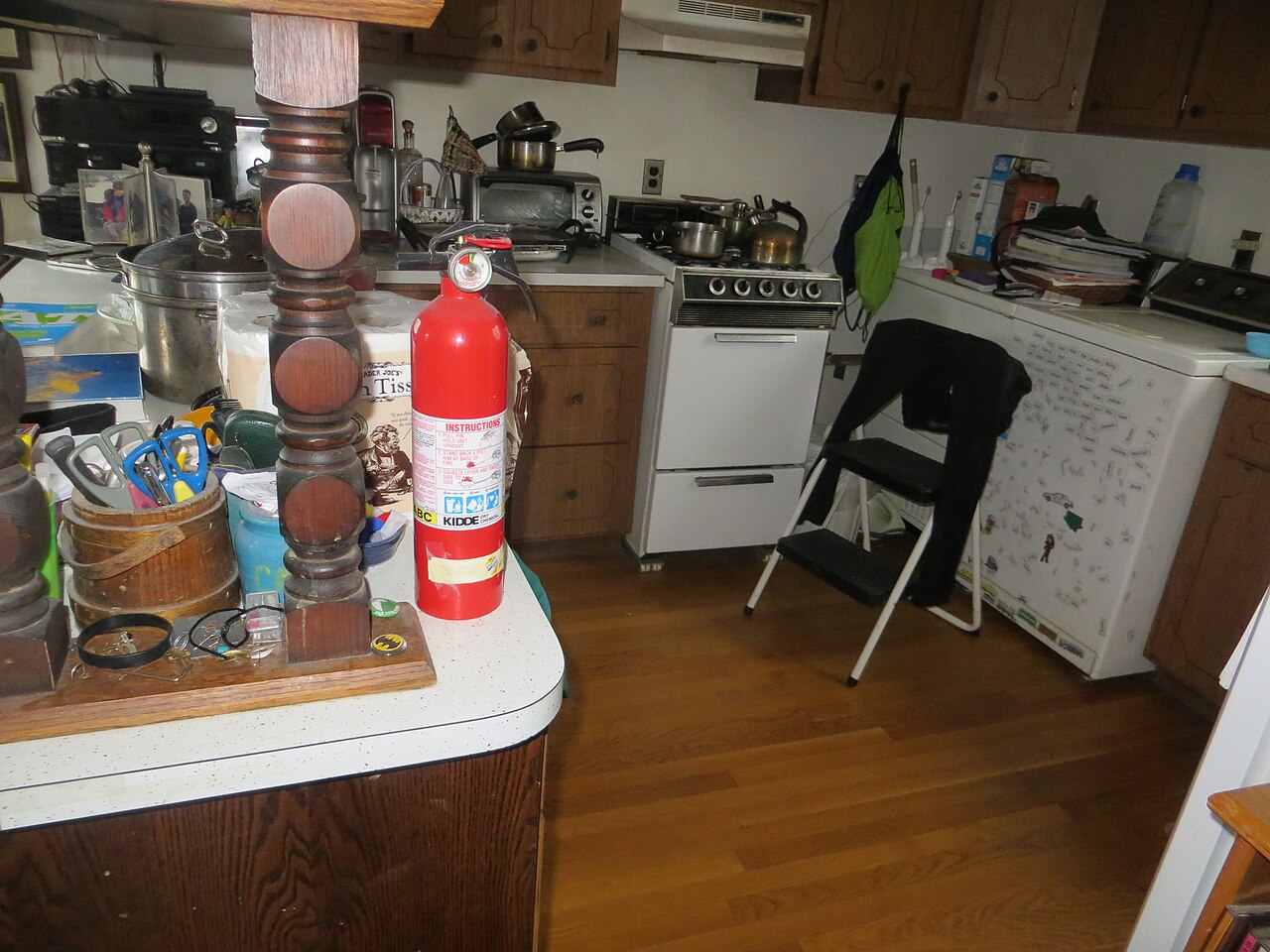
Buy a multi-purpose extinguisher that you can lift and aim without strain, mount it where you can reach it on the way to an exit, and think of it as a tool for buying a few seconds, not for winning a fight. The National Fire Protection Association puts escape first in every home fire and allows fighting only when the fire is small, confined and not growing.
Pick the class first, then the size
Extinguishers are sorted into classes by what is burning. The U.S. Fire Administration lists five primary types, and the label on a given unit tells you which of them it is rated for.
| Class | Fire it is meant for |
|---|---|
| A | Ordinary materials |
| B | Flammable liquids |
| C | Electrical equipment |
| D | Combustible metals |
| K | Cooking oils |
For a house or apartment, NFPA recommends a multi-purpose extinguisher, meaning one rated for more than one class, so you are not reading a label while the room fills with smoke. A single-class unit can leave you holding the wrong tool when a grease fire on the stove turns into a burning dish towel.
Size is a trade-off that people get backwards. A bigger cylinder holds more agent, but NFPA’s advice is an extinguisher large enough to handle a small fire and still not too heavy to use. USFA is more direct: choose the largest one that you can safely and comfortably operate. If the person most likely to grab it is the smallest adult in the house, that person should be the one who lifts it in the store aisle.
Look for the mark of an independent testing laboratory. NFPA asks for a label from one, and USFA names UL Listed and ULC Listed as the marks to look for. An unlabeled bargain cylinder is not a bargain.
Where to keep it
NFPA’s placement rule is short: near an exit, and positioned so that your back is to a clear way out when you use it. That second half matters more than the first. If the fire is between you and the door, you are in the wrong place to be fighting it.
Two practical consequences follow. An extinguisher mounted right beside the stove is out of reach if the stove is what is burning, so a spot just outside the kitchen doorway tends to work better than the wall beside the burners. And in a home with more than one floor, a unit on each floor you actually use means nobody carries a heavy cylinder up a stairway toward the smoke. Both points are reasoning from the exit rule, not a requirement quoted from a standard.
When to fight and when to leave
NFPA lists the conditions that all have to be true before you pick the extinguisher up. The fire is confined to a small area and is not growing. Everyone has left the home or is leaving. The fire department has been called. The room is not filling with smoke. USFA’s version covers the same ground and adds a clear escape route and protection from toxic smoke. If any one of those conditions fails, the answer is to go.
The American Red Cross states the rule without exceptions: get out, stay out and call for help, and never go back inside for anything or anyone. An extinguisher does not change that rule. It only applies to the first seconds, with the exit behind you.
Call 911 from outside whenever a fire has started, including one you think you put out.
| Check before you pick it up | Source |
|---|---|
| Fire is confined to a small area and not growing | NFPA |
| Everyone has left or is leaving the home | NFPA |
| The fire department has been called | NFPA, USFA |
| The room is not filling with smoke | NFPA |
| You have a clear escape route behind you | NFPA, USFA |
Read the table as an AND, not an OR. One missing line is enough to put the extinguisher back and leave. The reason is practical: a small fire becomes a large one quickly, and the time spent deciding is time the smoke is working on you.
Using it: PASS
NFPA teaches the sequence as PASS. Pull the pin. Aim low, at the base of the fire, not the flames. Squeeze the handle slowly and evenly. Sweep from side to side. Then keep watching the spot, because a fire can restart. If the unit runs out or the fire grows, you leave; you do not reload and try again.
The instructions are on the cylinder, but NFPA says to read them before you ever need them. Many fire departments and extinguisher distributors offer training. NFPA also believes children should not be trained to use extinguishers. Their job in a fire is to get out, and the escape plan should say so.
Check it on a schedule
An extinguisher you bought and forgot is a decorative object. USFA says to check the pressure and the parts, that some types need a monthly shake and some need a pressure test every few years, and that you recharge or replace the unit according to the gauge. Read your model’s manual for the exact interval, since it varies by type.
If the gauge is out of the green zone, the pin or hose is damaged, or the cylinder is dented or corroded, replace it. If you also run space heaters in winter, the extinguisher is only the backstop; the CPSC recall record is a better first stop for avoiding the fire in the first place.
Our take
One multi-purpose extinguisher, light enough for the least strong adult to handle, by the exit you would use anyway, covers what an extinguisher can realistically do. Anything past a small fire is a job for the fire department, and the safest use of the cylinder is often not using it.
Common questions about home fire extinguishers
Which extinguisher class do I need for a kitchen?
NFPA recommends a multi-purpose unit for the home. Class K is the one USFA lists for cooking oils, so check the label of any unit you buy to see which classes it covers.
How big should a home extinguisher be?
Big enough for a small fire and light enough to use comfortably. USFA says to choose the largest one you can safely and comfortably operate, so the right size depends on the person lifting it.
Should I try to put out any fire I can reach?
No. NFPA allows it only when the fire is small, confined and not growing, everyone is out, the fire department has been called and the room is not smoke-filled. Otherwise leave and call 911.
Can I teach my kids to use one?
NFPA believes children should not be trained to use extinguishers. Teach them to leave the home and meet at the outside spot in your escape plan.
How do I know if my extinguisher still works?
Check the pressure gauge and the condition of the parts, and follow the maintenance steps in the manual. USFA says to recharge or replace the unit based on the gauge.
Who checked this
True Security Gear does not run a test lab and does not take units apart. One half of the work is documents: manufacturer specs, certifications, and seller claims checked against the paperwork. The other half is the record owners leave behind, in verified-buyer reviews, owner forums, and warranty complaints. Where that evidence is thin we say it is thin, rather than filling the gap with an adjective. The criteria are on How we evaluate.
Google lets you pick which sites come up first in your own results.