True Security Gear is reader-supported. When you buy through links on our site, we may earn an affiliate commission. This doesn't affect our verdicts.
Pick a fresh tree, keep its stand full of water, and set it at least 3 feet from any heat source. Check every light string before it goes up, discard frayed or pinched strands, and turn the lights off when you go to bed or leave the house. Take the tree down once it dries out.
Where tree fires come from
The U.S. Fire Administration, citing NFPA, says almost one-third of home Christmas tree fires are caused by electrical problems. That puts the lights and cords at the top of the list, not the tree itself. The USFA holiday page also warns that a dry tree burns very hot and fast, so the two risks compound: a spark from a bad strand lands on dry needles.
Choosing the tree
For a live tree, NFPA’s Educational Messages Desk Reference says to look for fresh, green needles that do not fall off when touched. Keep the tree out of the garage and away from the house wall until you bring it in.
An artificial tree should be labeled fire resistant or fire retardant, and be listed by a nationally recognized testing laboratory, which NFPA abbreviates as NRTL. If it comes pre-lit, check the wiring for damage before you plug it in.
Placement
- Set the tree at least 3 feet from any heat source. USFA, NFPA and Ready.gov all use that distance. Fireplaces, radiators, heating vents and candles count.
- Do not let the tree block an exit. USFA and NFPA both say so.
- Use a stand with a water reservoir that you can see, so you know when it needs filling.
Water the tree every day
USFA says to water a live tree daily. That is the simplest control for the fact that a dry tree burns very hot and fast. NFPA adds the other end of the season: remove the tree after Christmas or when it is dry, whichever comes first. A tree that has dropped most of its needles is a hazard, not a decoration.
Lights: inspect, then limit
Before hanging anything, inspect each strand. USFA says to do this every year, and to discard strands that are frayed or pinched. NFPA says to replace worn strings.
A few rules from NFPA and CPSC cover how many to connect and where.
- Use lights listed by an NRTL.
- Read the manufacturer’s limit on how many strands can be connected end to end, and follow it. USFA gives the same instruction.
- CPSC’s holiday safety page says never to string together more than three sets of incandescent lights.
- Use outdoor-rated lights and cords outside.
- Follow the manufacturer’s instructions for how to hang them.
Turn them off
NFPA says to turn off tree lights when you go to bed or leave the house. Ready.gov says the same about holiday lights at night. A timer is one way to make that automatic, though the sources reviewed here do not discuss timers, so check the timer’s own rating before relying on it with a long string.
Extension cords at the tree
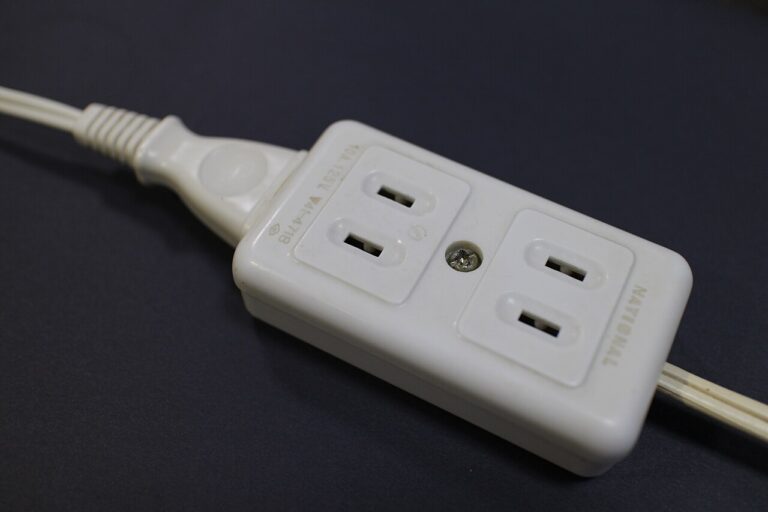
Trees tend to sit far from outlets, which is how extension cords end up under rugs. USFA says to avoid running cords under carpet or rugs. Ready.gov says not to overload extension cords and outlets, and CPSC lists no cords under rugs. If you use a cord, it should be for temporary use only, as USFA and NFPA say.
If something does ignite
Speed is the problem. Ready.gov says a small flame can become a major fire in under 30 seconds, and that a fire can become life-threatening in just two minutes. A dry tree is exactly the fuel that makes that curve steep, which is why the advice is to leave rather than fight it.
USFA’s escape planning page says everyone should be able to get out in under 2 minutes, with two ways out of every room. A tree in front of the main door or a stairway undercuts that plan. Walk your exits once the tree is in place and confirm that you can still reach them in the dark, which is how Ready.gov says to practice.
When you do leave, call 9-1-1 from outside, at your meeting place.
A simple schedule
| When | What to do |
|---|---|
| Before hanging lights | Inspect every strand, discard damaged ones, check the strand limit |
| Bringing the tree in | Check for fresh green needles; place it 3 feet from heat; keep the exit clear |
| Every day | Check the water |
| Every night and when you leave | Turn the lights off |
| After Christmas, or earlier if dry | Take the tree down |
Sources
- U.S. Fire Administration, Holiday fire prevention, read November 2026
- NFPA, Educational Messages Desk Reference, 2026 edition (PDF), read November 2026
- U.S. Consumer Product Safety Commission, Holiday safety, read November 2026
- Ready.gov, Home fires, read November 2026
- U.S. Fire Administration, Appliance and electrical fire prevention, read November 2026
FAQ
How far should a Christmas tree be from a heater or fireplace?
At least 3 feet from any heat source, according to USFA, NFPA and Ready.gov.
How often should I water a live tree?
Daily, per USFA. NFPA says to remove it after Christmas or when it is dry.
Can I leave the tree lights on overnight?
No. NFPA says to turn them off when you go to bed or leave, and Ready.gov says the same for holiday lights at night.
How many light strands can I connect?
Follow the manufacturer’s limit printed with the product. CPSC says never to string together more than three sets of incandescent lights.
Are artificial trees safer?
NFPA’s guidance is that an artificial tree should be labeled fire resistant or fire retardant and be NRTL listed. It does not rank artificial against live trees, so choose on the label and the condition of the wiring.
Who checked this
True Security Gear does not run a test lab and does not take units apart. One half of the work is documents: manufacturer specs, certifications, and seller claims checked against the paperwork. The other half is the record owners leave behind, in verified-buyer reviews, owner forums, and warranty complaints. Where that evidence is thin we say it is thin, rather than filling the gap with an adjective. The criteria are on How we evaluate.
Google lets you pick which sites come up first in your own results.