True Security Gear is reader-supported. When you buy through links on our site, we may earn an affiliate commission. This doesn't affect our verdicts.
Short answer: A pre-packed emergency backpack gets you started, not finished. The Red Cross puts water at one gallon per person per day, and every pack below has to be checked against that. Three real packs are compared, with what each listing says is inside and what you still have to supply.
True Security Gear is reader-supported. When you buy through links on our site, we may earn an affiliate commission. This doesn’t affect our verdicts. See our affiliate disclosure.
A grab-and-go pack solves one problem: the moment you have to leave and cannot think. It does not solve a week without water. If you buy one, treat the contents list as a starting point and fill the gaps you can see.
Our take
Match the pack to your headcount. The two Ready America packs are for two people; the Red Cross-licensed one is listed for four. None of them includes everything on the Red Cross list, so plan to add medication, documents and cash yourself. On water, every pack here falls short of the benchmark, and the listings are open about relying on you for more.
The benchmark
The American Red Cross survival kit page recommends one gallon of water per person per day, with a three-day supply for evacuation and a two-week supply for home. It lists the same three-day and two-week split for food. Beyond that: a flashlight, a battery-powered or hand-crank radio (NOAA Weather Radio if possible), extra batteries, a first aid kit, a seven-day supply of medications and a multi-purpose tool. It also lists copies of documents, cash, an emergency blanket and a map.
Do the math with one of the packs below. Two people for three days is six gallons. The Ready America 70287 lists twelve 4.225 oz water pouches. Twelve times 4.225 is about 50.7 ounces, or roughly 0.4 gallon. That is a fraction of what the benchmark asks for, and it is a normal feature of packs this size rather than a flaw in one brand. Water is heavy, and a pack that carried six gallons would weigh more than most people want to carry.
Three packs
Ready America 70287 Tornado Emergency Kit
A two-person pack with the basics for a short evacuation.
- Two food bars of 2400 calories each and twelve 4.225 oz water pouches.
- A 33-piece first aid kit, plus ponchos, gloves and goggles.
- Listed at 8.9 lb and 10 x 8 x 15 inches.
First My Family 2-Person Emergency Survival Kit
A two-person kit that claims to meet Red Cross guidelines.
- Built for two people. The listing says it exceeds Red Cross guidelines; that is the listing’s own claim, and we have not checked the contents list against the Red Cross one.
- Read the full contents on the listing before you rely on it for water or medical supplies.
American Red Cross Licensed 3 Day Deluxe Emergency Preparedness Backpack
The larger option, for a family of four.
- Listed for four people, with 191 essentials.
- 20.8 lb, 17 x 16 x 13 inches. Food and water shelf life of five years, per the listing.
The point of the arithmetic above is not to talk you out of a pack. It is to tell you that water is the item you will have to add, whether that means filling bottles before you leave, carrying a filter, or knowing where you can get more on the road.
Side by side
| Pack | People | Water in the pack | Extra |
|---|---|---|---|
| Ready America 70287 | 2 | 12 x 4.225 oz pouches (about 0.4 gal) | 33-piece first aid, ponchos, gloves, goggles, 8.9 lb |
| First My Family 2-person | 2 | See the listing | Claims to exceed Red Cross guidelines (listing’s claim) |
| Red Cross licensed | 4 | Not itemized in the bullets we read | 191 items, 5-year shelf life, 20.8 lb |
What to add before it goes in the closet
Medications for a week, copies of IDs and insurance in a plastic bag, cash in small bills, a phone charger, and shoes if the pack lives far from the door. Put the date you packed it on a tag and look again in six months. Our fire escape plan guide covers the meeting place, which is the other half of leaving fast.
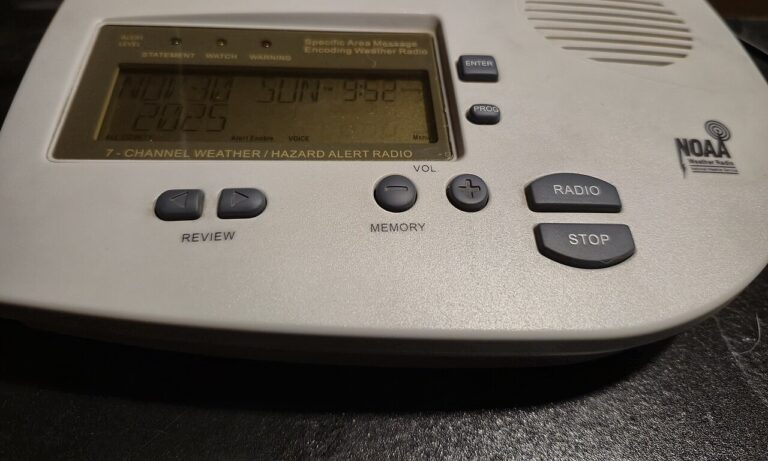
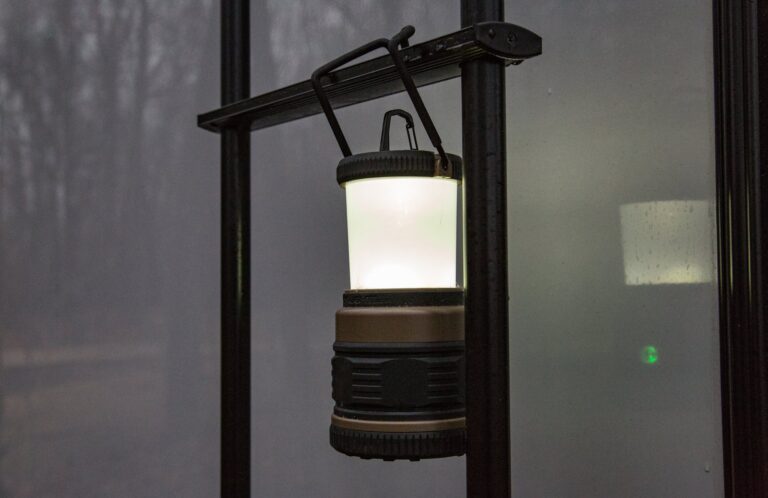
Add a flashlight and a radio if the pack does not have them, with spare batteries. The Red Cross list asks for a battery-powered or hand-crank radio, and a NOAA Weather Radio if possible. A multi-purpose tool, a whistle and a map of your area round it out. If you have pets, infants or anyone with a medical device, those needs are yours to plan for; no box will know.
Making it yours
A pack from a box is built for an average household, and nobody lives in an average household. Start by listing who will be carrying it. A pack for two adults is not a pack for a parent with a toddler, or for someone with a medical device. Sit down with the contents list and cross out what you will never use, then write what is missing.
Weight matters more than most listings admit. The Red Cross licensed pack is listed at 20.8 lb before you add anything. That is a lot to carry for a long walk. If the person most likely to carry it is small, or older, or has a bad back, consider splitting the load between two bags. The Ready America 70287 is listed at 8.9 lb, which is easier, though it holds proportionally less.
Try it on. Put the pack on, walk around the block, and see how it feels after ten minutes. If the straps cut in, you will want to know that now.
Where it goes
Keep it where you can reach it without moving anything else. A hall closet near the door beats a basement shelf. If you live in an apartment building, check where the stairs are and whether a bulky pack would block them. Keep shoes, a jacket and a flashlight within arm’s reach of the pack.
Think about the car, too. If you drive out of town, a second smaller bag in the trunk is cheap insurance. Water in a hot car does not last, so do not count it as your main supply.
Common mistakes
The first is assuming the pack is complete. The contents are a guess about an average household. The Red Cross list includes medications, documents and cash that no pre-made pack can contain.
The second is leaving it untouched for years. Food bars, water pouches and batteries carry dates. A five-year shelf life on a listing is still a date, and it starts when the pack was made, not when you bought it.
The third is packing it so heavy nobody can lift it. A pack you cannot carry down a flight of stairs is furniture.
The fourth is keeping it in a place that gets hot. An attic or a car trunk in summer is hard on food, water and batteries. A cool, dry closet is better.
Keeping it ready
Twice a year, open the pack on a table. Check every date. Replace what is close to expiring, swap batteries, and update the medication supply and the copies of documents. Weigh it again if you added things. Then write the new date on the tag and put it back where it belongs.
Practice once
Pick a quiet evening and run a drill. Grab the pack, put on shoes and walk to your meeting place. Time it, and talk about what slowed you down. Most families find one thing they missed, such as a pet carrier or a charger. Fix it, then put the date on the tag again.
Questions people ask
Is a pre-made pack enough?
It is a start. The Red Cross list includes medications, documents and cash that no pre-made pack can know about.
How much water do I need?
One gallon per person per day, according to the Red Cross: three days to evacuate, two weeks at home. Two people for three days is six gallons.
Why is there so little water in the pack?
Water is heavy. The Ready America 70287 lists twelve 4.225 oz pouches, about 0.4 gallon, so plan to bring more.
Where should it be stored?
Near the exit you would use, in a spot that stays cool and dry.
Do the listed shelf lives hold up?
We have not checked. The five-year figure is the listing’s.
Is a pack for two enough for a family of four?
No. Buy a pack sized for your headcount, or buy two and split the weight.
Sources
Red Cross page read on 2026-11-05. Pack contents come from the Amazon listings linked above and were not verified by us.
- American Red Cross, Survival Kit Supplies
Who checked this
True Security Gear does not run a test lab and does not take units apart. One half of the work is documents: manufacturer specs, certifications, and seller claims checked against the paperwork. The other half is the record owners leave behind, in verified-buyer reviews, owner forums, and warranty complaints. Where that evidence is thin we say it is thin, rather than filling the gap with an adjective. The criteria are on How we evaluate.
Google lets you pick which sites come up first in your own results.