True Security Gear is reader-supported. When you buy through links on our site, we may earn an affiliate commission. This doesn't affect our verdicts.
Short answer: If a storm takes out your power and cell service, a radio that does not depend on either can still receive National Weather Service alerts. Check one thing before you buy: the radio must receive the NOAA Weather Radio band, because an ordinary AM/FM set will not. Two crank-and-solar models are compared below, along with how to choose, set up and maintain one.
True Security Gear is reader-supported. When you buy through links on our site, we may earn an affiliate commission. This doesn’t affect our verdicts. See our affiliate disclosure.
Phone alerts are good until the tower loses power or the battery dies. A weather radio is a boring, single-purpose receiver, which is exactly why it keeps working when the fancy stuff does not.
Our take
Buy for the band first and the charging options second. A radio that lists NOAA weather reception, can recharge from more than one source and sits where you can reach it at night will do the job. Between the two below, the Kaito KA500L is the simpler set built around a solar panel and a built-in generator; the Kaito Voyager Pro KA600 adds a rechargeable-battery option and a third power route. Both list the NOAA band.
What NOAA Weather Radio is
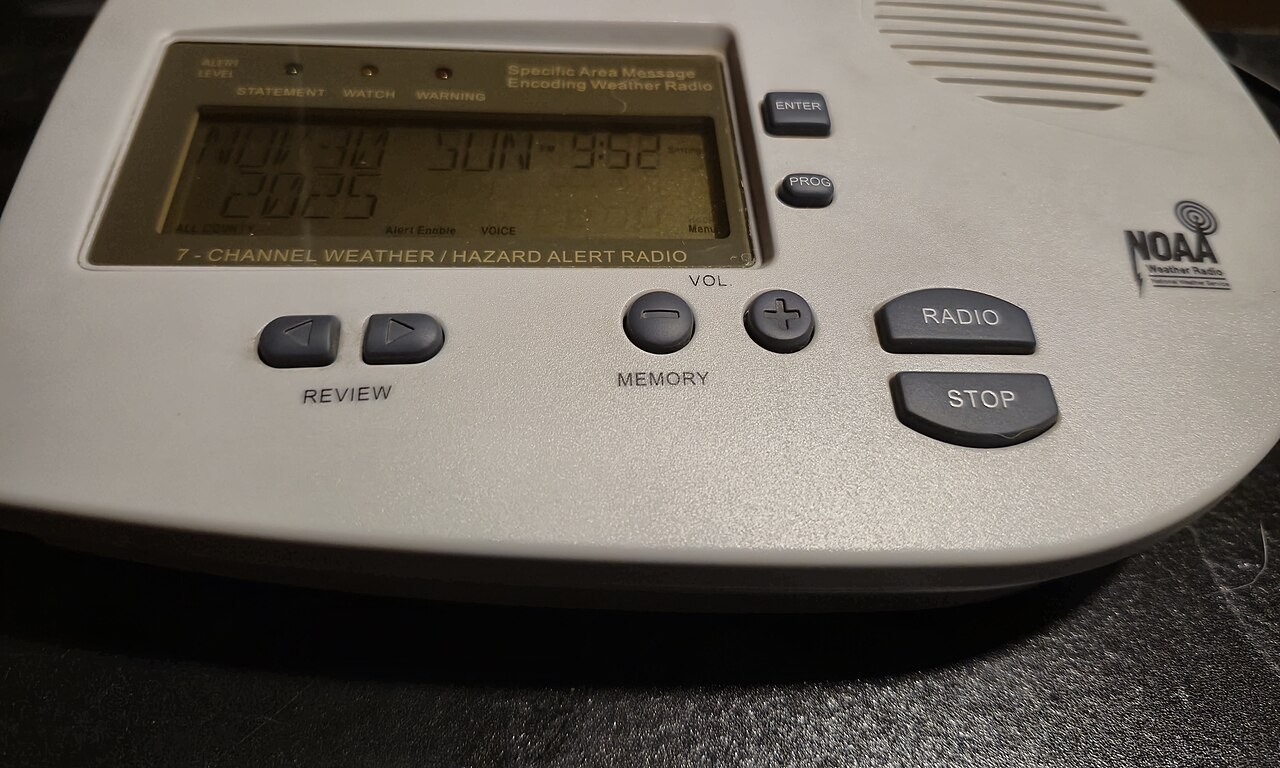
The National Weather Service describes NOAA Weather Radio All Hazards as a nationwide network of stations broadcasting weather and hazard information around the clock, from over 1,000 transmitters covering all 50 states, Puerto Rico, the U.S. Virgin Islands and Pacific territories. It carries natural, environmental and public safety alerts. Listening requires a special receiver or scanner, and the service uses seven VHF frequencies between 162.400 and 162.550 MHz. A standard AM/FM radio will not pick it up.
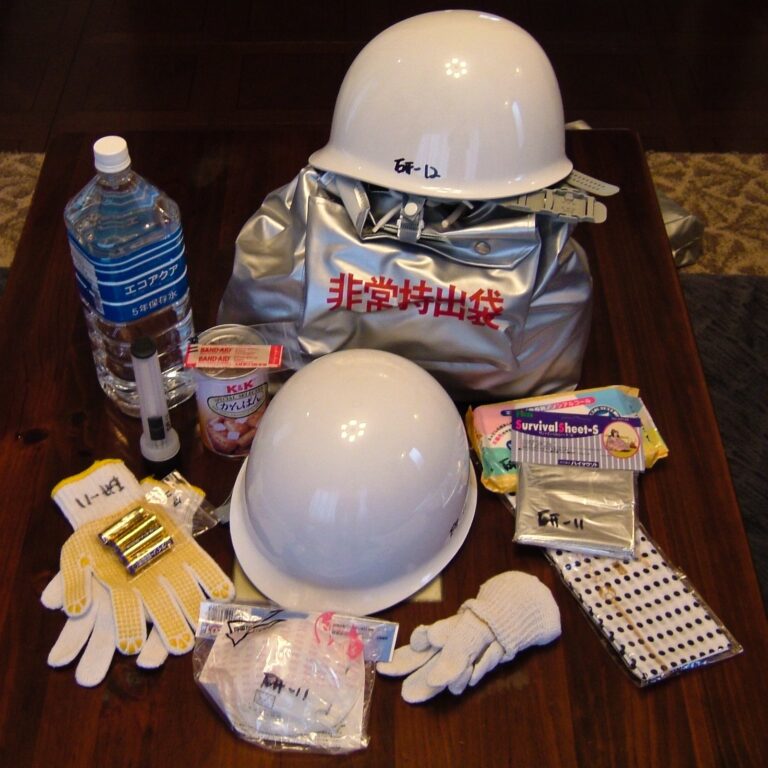
The Red Cross kit list asks for a battery-powered or hand-crank radio, a NOAA Weather Radio if possible, and extra batteries.
One more fact from the National Weather Service shapes everything below. Its county coverage page says that service depends on reliable signal reception, which typically extends in about a 40 mile radius from the transmitter, assuming level terrain. Counties in mountainous areas may be listed as covered and still have weak reception in some spots because of signal blockages or distance. The same page lists, for every county, the transmitter frequency, call sign and power, along with a Specific Area Message Encoding (SAME) code. So before you spend money, look up your county on the National Weather Service coverage listing and see which transmitter serves you.
How to choose one
Start with the band. The listing should say NOAA, weather band or WX, and it should say how many weather channels the radio receives. Seven is the full set the service uses. A radio that receives fewer may still work where you live, but you would be betting on your local transmitter being on one of those channels.
Next, look at how it charges. A radio that depends on a single source is only as reliable as that source. Solar needs daylight, which is scarce in the middle of a winter storm. A crank needs a person with a free arm and some patience. A USB or wall charger needs the grid. Having more than one route is the point of buying this type of radio, so favor the model with more of them and use the grid to top it off before bad weather arrives.
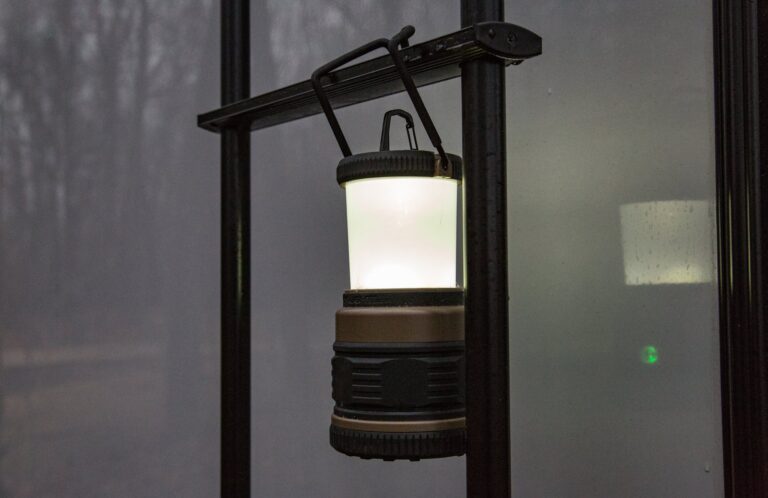
Then check the extras you will actually use. A flashlight is handy, and a reading lamp is better for a room full of people. A phone-charging output is useful in a pinch, but it draws on the same small battery that runs the radio, so treat it as a last resort.
Finally, think about where the radio will live. A radio that sits on a nightstand and can be reached in the dark gets used. One in a hall closet gets forgotten. The weather service broadcasts its warnings at all hours, and the dangerous ones can arrive at night.
Two crank-and-solar radios
Kaito KA500L 4-Way Powered Emergency Radio
The simpler set, with solar and a built-in hand generator.
- Powered by solar panel, a built-in brushless generator you turn by hand, rechargeable batteries and USB, per the listing.
- AM, FM, shortwave and NOAA weather. The listing says the weather band receives seven channels in the USA and Canada.
- Two lights: a bright reading lamp and a flashlight that doubles as an SOS signal.
- Listed at 8 x 2 x 5.5 inches.
Kaito Voyager Pro KA600
More power routes, for people who want to keep options open.
- Powered by solar, dynamo crank or a rechargeable battery.
- AM, FM, LW and SW bands plus NOAA weather channels.
- Flashlight, reading lamp, and a phone charging output.
One detail on the KA500L: the first bullet on its listing says standalone lithium batteries are not sold with the product, while the specifications table lists a battery among the included components. Read the box contents when it arrives and do not assume you have spares. A hand crank is a backup, not a primary power source. Expect to turn it for a while to get a short stretch of listening, and charge the battery ahead of the storm.
Side by side
| Radio | Power | Bands (listing) | Extra |
|---|---|---|---|
| Kaito KA500L | Solar panel, hand-turned generator, rechargeable batteries, USB | AM, FM, SW, NOAA (7 weather channels) | Reading lamp, SOS flashlight |
| Kaito Voyager Pro KA600 | Solar, dynamo, rechargeable battery | AM, FM, LW, SW, NOAA | Reading lamp, phone output |
Setting it up so it helps
Take it outside, extend the antenna and scan the weather channels. Leave it on the strongest one. If you get nothing at your address, move it near a window and try again before returning it. A radio that works in the yard and not in the basement is normal, and given the National Weather Service’s own note about terrain and distance, it is not a defect.
If you can pick up several channels, compare them with the transmitter listed for your county. The strongest signal is not always the one meant for your county, and a station for the next county over may report conditions that do not apply to you.
Keep it with the flashlights and the first aid kit so the whole outage shelf is in one place. If you have a generator, keep it outdoors and well away from the house; our generator placement guide covers the distances, and our carbon monoxide alarm guide covers what to do if an alarm sounds.
Reading the alerts
Getting the signal is half of it. The other half is knowing what you are hearing. Weather alerts come in more than one level, and a radio that sounds a tone for everything teaches people to ignore it. Spend a few minutes with the manual and learn how your model handles alert tones, what it does when it receives a warning, and how to silence one that is not for your area.
The National Weather Service ties a broadcast to a county with the SAME code. Some radios let you enter that code so they alert only for your location; others sound for every broadcast they can hear. Neither listing above spells out area filtering in the bullets we read, so treat it as an open question and check the manual for your unit. If it has no such feature, you will hear alerts for neighboring counties and have to judge for yourself whether they apply.
Think about how long you will listen. A radio that runs on a battery lasts longer if you turn off the flashlight and the phone charging function. A phone on a small radio battery is a trade, and during a long outage the radio is usually the better use of the charge.
Common mistakes
The first is buying on bands and skipping the weather channel count. A fancy shortwave set that cannot tune NOAA is a hobby radio, not a safety device.
The second is never testing it. People unbox a radio, put it on a shelf, and find out in a storm that the battery is flat or the antenna does not reach. Run it for ten minutes the day you buy it.
The third is trusting the crank. It is the weakest of the power routes, and a radio left to drain over a winter will not be saved by a minute of turning.
The fourth is putting the radio in a metal cabinet, a basement corner or a shed. Concrete and steel can block the signal, and the radio may sit silent while a warning goes out.
Keeping it ready
Charge it fully in the spring and fall, the same days you test the smoke alarms. Tune to your channel and listen for a minute to confirm the signal is still there. If the radio takes removable batteries, check them for corrosion and replace them on a schedule instead of waiting for them to fail. Wipe the solar panel if it collects dust, and keep the antenna from bending when you store it.
Do a short listening test every month or two, even when the sky is clear. If the radio goes silent where it used to work, move it, recharge it and retry before you decide it has failed. Write the date of the last full charge on a piece of tape on the back, so the next person to pick it up knows how old it is.
Which one I would put by the bed
If your main reason is weather alerts, the simpler radio is easier to live with, and the solar panel on the KA500L suits a windowsill. If you enjoy listening to distant stations, or you want a longer-wave band for news, the KA600 has more to offer. That is a preference, not a safety difference, and both list the NOAA band.
Whichever you choose, check it at the spot where it will live. A radio that gets a strong signal in the yard and a weak one by the bed may need to move to a windowsill. Try it before the weather turns, not during.
Questions people ask
Why not just use my phone?
Phones are fine until the network or the battery fails. A radio receives alerts over a different path, and the NWS says its service runs around the clock.
Does a regular AM/FM radio get NOAA alerts?
No. The National Weather Service says a special receiver or scanner is needed, tuned to one of seven VHF frequencies.
How far away can I be from the transmitter?
The National Weather Service says reliable reception typically extends about 40 miles from the transmitter over level terrain. Hills, buildings and distance shorten that, so test the radio where you will use it.
Do I need a crank?
Not strictly. The Red Cross lists battery-powered or hand-crank radios and extra batteries. A crank is useful because it removes the dead-battery problem, but it is slow.
What is a SAME code?
It is a code the National Weather Service assigns to each county. Radios that support it can be set to alert only for your area. The service publishes the code for every county on its coverage page.
Where should it live?
Near your bed or the room you shelter in, with your flashlight.
Sources
Government and nonprofit pages read on 2026-11-05. Product details come from the Amazon listings linked above and were not measured by us.
- National Weather Service, NOAA Weather Radio All Hazards
- National Weather Service, NOAA Weather Radio county coverage by state
- American Red Cross, Survival Kit Supplies
Who checked this
True Security Gear does not run a test lab and does not take units apart. One half of the work is documents: manufacturer specs, certifications, and seller claims checked against the paperwork. The other half is the record owners leave behind, in verified-buyer reviews, owner forums, and warranty complaints. Where that evidence is thin we say it is thin, rather than filling the gap with an adjective. The criteria are on How we evaluate.
Google lets you pick which sites come up first in your own results.