True Security Gear is reader-supported. When you buy through links on our site, we may earn an affiliate commission. This doesn't affect our verdicts.
A keypad lock takes a code and opens the door. A smart lock does that too, and also talks to your phone, your Wi-Fi, and sometimes your doorbell. If all you want is to stop hiding a key under a flowerpot, the keypad lock is the better buy: fewer batteries, fewer updates, nothing to break when the internet goes down. Pay for a smart lock when you genuinely need to let someone in while you are somewhere else.
Our take
Most people buy more lock than they use. A good keyed-plus-keypad deadbolt covers the daily problem for half the money. Buy connected only if remote access or a cleaning schedule is a real part of your week.
The categories overlap enough that manufacturers blur them on purpose. Both fit the same standard door prep, both run on AA batteries, both let you punch in a code. The dividing line is whether the lock has a radio in it, and whether that radio reaches your phone from outside the house.
What a keypad lock gives you
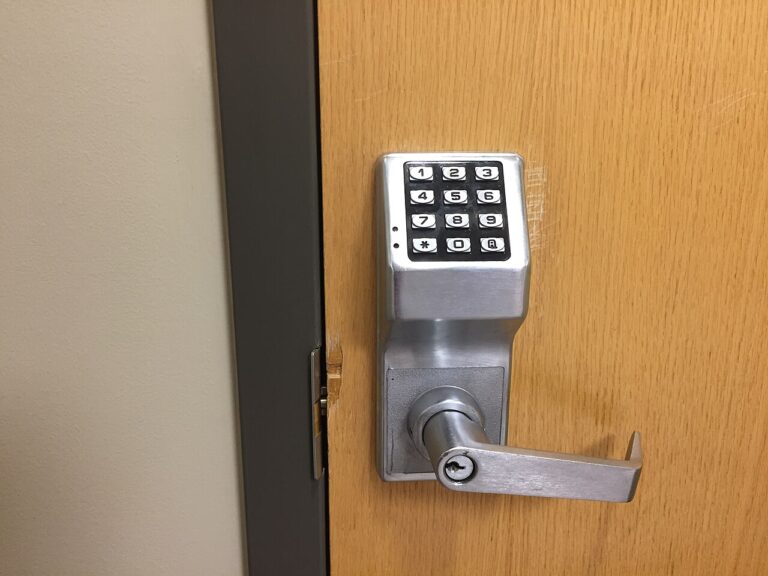
Codes instead of keys. That is the whole product, and it solves more household problems than the price suggests: the kid who loses keys, the dog walker who needs Tuesday access, the moment you lock yourself out in the yard.
Because there is no radio, battery life runs a year or more rather than three to six months. There is no app to update, no account to breach, and nothing that stops working when the manufacturer sunsets a cloud service, which has happened to more than one connected lock brand. The lock does one job and keeps doing it.
The limit is equally clear. You cannot check whether the door is locked from the office, you cannot hand out a code without being present to program it, and you get no log of who came and went.
What the radio adds
Three things worth paying for, if you use them.
Remote lock and unlock, which turns the 10 p.m. “did I lock the door” question into a two-second glance. Time-limited codes, which is what makes a cleaner or a contractor practical without cutting a key. And an access log, so you know the dog walker arrived at 1:15 rather than assuming it.
Auto-unlock, where the lock opens as you approach with your phone, is the feature that sells the category and the one that disappoints most often. It relies on Bluetooth and geofencing, both of which are approximate, so it fires late, fires early, or fires while you are in the driveway. Treat it as a bonus, not a reason to buy.
| Keypad deadbolt | Smart lock | |
|---|---|---|
| Typical price range | $40–$120 | $120–$300 |
| Battery life | About a year | Three to six months |
| Works with internet down | Yes | Keypad yes, remote no |
| Guest codes on demand | Program at the door | From anywhere |
| Access history | None | Yes |
| Ongoing maintenance | Batteries | Batteries, firmware, app account |
The part neither category fixes
Both are still deadbolts, and a deadbolt is only as strong as the wood around it. Almost every forced entry through a residential front door is a kick that splits the jamb, not an attack on the lock cylinder. A $250 connected lock in a hollow jamb with 3/4-inch strike screws fails to the same boot as a $40 one.
Spend the first $15 on a strike plate with 3-inch screws that reach the stud behind the frame. We walk through the whole sequence in how to reinforce a door, and it changes the outcome far more than the lock choice does. The grade rating matters too, and it is not marketing: our comparison of Grade 1 and Grade 2 deadbolts explains what the numbers are actually measuring.
Three locks worth comparing
Schlage BE365 Keypad Deadbolt
The no-radio benchmark. Grade 2 build, codes programmed at the door, and a battery you change once a year.
- Keyed override, so a dead battery is an inconvenience rather than a lockout
- Programs up to 19 user codes without any app involved
- No remote access and no log, which is the entire trade
Yale Assure Lock 2 with Wi-Fi
Sold with the Wi-Fi already built in, so it behaves like a smart lock even on the days you only touch the keypad.
- Sold in keyed and key-free versions, and the key-free one has no cylinder to pick
- Wi-Fi, Z-Wave and Matter modules sold separately for the same lock body
- This listing is the bundled version, so there is no module to add later
August Wi-Fi Smart Lock
Mounts over your existing deadbolt on the inside, so the outside of the door does not change at all.
- Keeps your current key and cylinder, which landlords tend to prefer
- Full remote control and access history without replacing the hardware
- No keypad in the box, so phone-free entry means buying one
Renting changes the answer
A retrofit lock that mounts on the interior side and leaves the original cylinder in place is usually the only version a lease permits, because nothing about the door changes from the hallway. Keypad deadbolts almost always require swapping the exterior hardware, which is the part landlords object to. We cover what leases typically allow in smart locks for renters and the broader rules in our guide to lease security device restrictions.
If you would rather not touch the door at all, there are other routes to the same result. Our roundup of no-drill security devices covers what works when drilling is off the table.
Frequently asked questions
What happens to a keypad lock when the batteries die?
Most warn you for weeks with a beep or a flashing keypad before they quit. If one does die, keyed models open with the physical key, and many key-free models have exterior contacts that take a 9V battery held against them long enough to power one entry. Keep a spare set of AAs indoors and check them when the clocks change.
Can a smart lock be hacked?
Remote attacks on major brands are rare and mostly theoretical. The realistic risks are duller: a reused password on the app account, a guest code you never revoked, or a code someone watched you type. Turn on two-factor authentication, delete old codes when access ends, and cover the keypad with your hand.
Do keypad locks wear out and show which buttons you press?
Yes, on rubber and painted keypads. Frequently used digits go shiny and narrow the guesses considerably. Touchscreen models avoid this because the whole surface is glass, and some scramble the digit positions on each use. If you have a physical keypad, change the code once a year and wipe it down.
Is a smart lock worth it if I already have a video doorbell?
They solve different halves of the same moment. The doorbell tells you someone is there; the lock decides whether they get in. The pairing is genuinely useful for deliveries and scheduled visits. If neither of those is part of your week, the doorbell alone covers most of what you wanted.
Before you order either one, open your front door and look at the strike plate screws. If they are the short ones that came with the house, buy 3-inch screws first and decide about the lock afterward.
Who checked this
True Security Gear does not run a test lab and does not take units apart. One half of the work is documents: manufacturer specs, certifications, and seller claims checked against the paperwork. The other half is the record owners leave behind, in verified-buyer reviews, owner forums, and warranty complaints. Where that evidence is thin we say it is thin, rather than filling the gap with an adjective. The criteria are on How we evaluate.
Google lets you pick which sites come up first in your own results.